Photography by Vincent Mistretta

The Archives

November 2009


  • Mammals, Travel, Wildlife

    Africa Day 2, Morning Game Drive

    First of all I would like to thank everyone for the notes I have received since my return. I am feeling better and expect to make a full recovery shortly.

    The itinerary for our trip was a fairly simple one. Each day was comprised of an early morning activity (4:45 AM wake up) and an early evening activity. This left the heat of the afternoon (this was the summer in Africa of course) for education, naps, inter-camp travel or individual game reserve exploration.

    The exception to this itinerary was our first full day. We had an early morning game drive in Mosi-Oa-Tunya National Park, followed by a trip to Victoria Falls and then another evening boat ride on the Zambezi River.

    The main purpose of our stop to Zambia was to have the group acclimate to the time zone and check our gear before we headed to our main photographic destination, Botswana.

    The Mosi-Oa-Tunya National Park was full of wildlife. However park management never stocked or reintroduced predators in this park due to its proximity to a large orphanage at the main gate to the park. The prime subjects for us were the White Rhino herd, 5 in total, that were recently reintroduced to the park.
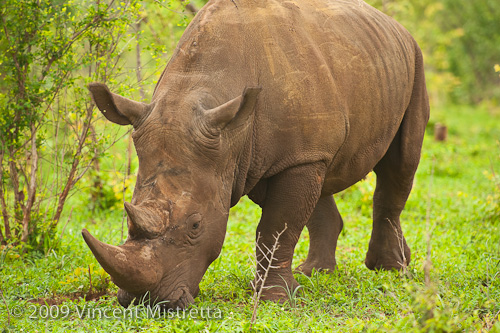
    White Rhinoceros Grazing

    White Rhinoceros Grazing

    It is hard to appreciate the majesty of these animals until you are up close and personal!
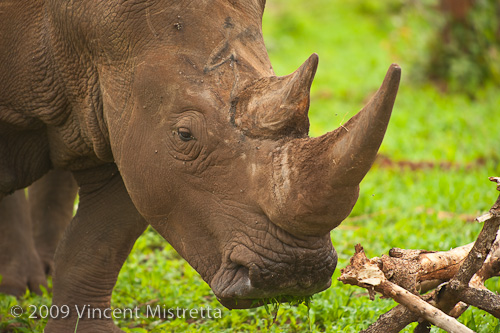
    Male White Rhino checking out his audience

    Male White Rhino checking out his audience

    Unfortunately for the group we only located this lone male, the females were nowhere in site.

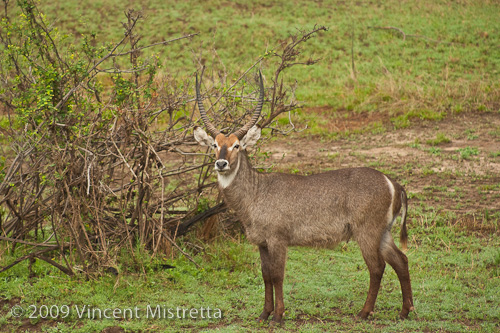
    One of the challenges that the group faced photographing in Zambia and Botswana were the busy backgrounds. Many people associate photographing animals in Africa with the cleaner backgrounds common in Tanzania (Serengeti) and Kenya. Here are two examples of images doomed by background.
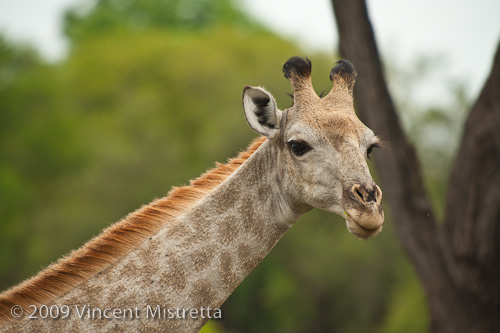
    Southern Giraffe in Zambia

    Southern Giraffe in Zambia

    Common Waterbuck

    Common Waterbuck

    Both of the above pictures are nice “mementos” but not valuable for a portfolio. You might be able to get away with the Giraffe background but definitely not the Waterbuck’s.

    One surprisingly interesting subject were the Fireball Lilies that dotted the landscape of all the parks we visited. You don’t normally think of flowers when you think of the Kalahari and other dry locales.
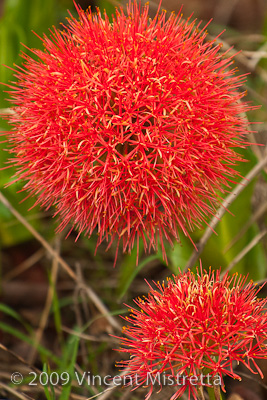
    Fireball Lilies in full bloom

    Fireball Lilies in full bloom

    Stay tuned for Victoria Falls and the second Zambezi River trip! They will be posted soon.
    Share on TwitterShare on TumblrSubmit to StumbleUpon
  • Mammals, Travel, Wildlife

    Africa, First Stop, Zambia

    11.21.09 | Permalink | 3 Comments

    Hello All,
    I am back from Africa and I have a lot to share with you. I know some of you are asking why I am back so soon. Well, the short answer is I had a bad reaction to the malaria medication I was given and it forced me to end my trip 6 days early. It was a devastating set of circumstances given I had planned this trip for 12 months. However, on the bright side, I am home, safe and under the care of my own doctors. But I will admit that the 28 hours it took me to leave camp and land at JFK were extremely stressful. That all said, I expect to be fully recuperated in time for Thanksgiving dinner!

    So our group had their first stop at Toka Leya camp in Zambia. This camp is fairly new, approximately 1 1/2 yrs. old. It sits right along the Zambezi River, a few miles up river from Victoria Falls. Victoria Falls are one of the seven natural wonders of the world.

    Our first game drive was a sunset boat ride along the river (I know, if my wife or mother finds out I was in a small boat, in the dark, on a river filled with crocodiles and hippos I might not see Thanksgiving Day).

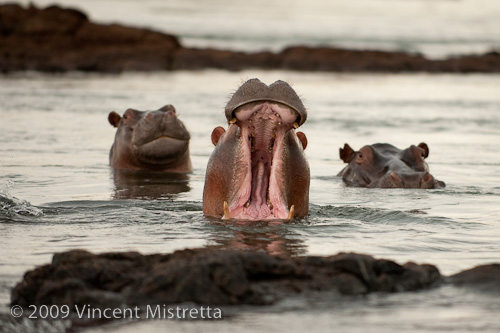
    Speaking of hippos, as soon as we entered the water we saw our first herd.

    Yawning Hippopotamus in the Zambezi River, Zambia

    Yawning Hippopotamus in the Zambezi River, Zambia

    Hippos sometimes yawn to show potential threats how fierce they are. We didn’t need much convincing!

    The Zambezi River is shared by Zimbabwe and Zambia as are Victoria Falls. The ecosystem is filled with wildlife, both mammals and birds. We could have stayed in the river for several days and not had a chance to photograph all that we witnessed.

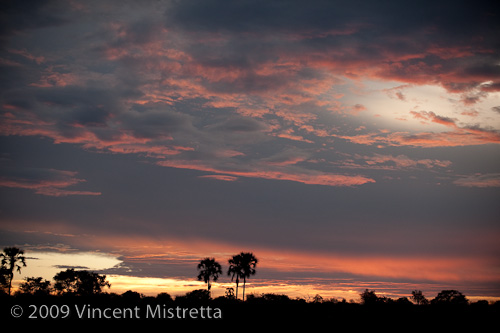
    Zambian sunset from the Zambezi River

    Zambian sunset from the Zambezi River

    The summer months in Africa are considered the rainy season. An advantage of being there during this time are clouds! The rest of the year has just plain blue or grey skies which can get pretty monotonous.

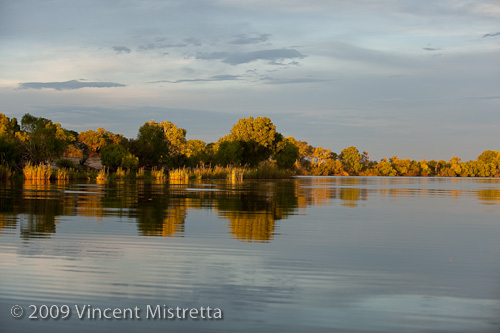
    Sunset over Zimbabwe, from the Zambezi River

    Sunset over Zimbabwe, from the Zambezi River

    Over the next few days/weeks, I will journal for everyone our daily game drives as well as provide information about our experiences during the trip. Many people have asked me about what I brought and how I packed. A separate post would be necessary to do justice to this topic and I will provide this information at the end (most likely after the holidays).

    If you have any comments or questions about the trip either drop me a line of leave a comment. I will most definitely be around the next week.

    Share on TwitterShare on TumblrSubmit to StumbleUpon
  • Education

    D-65 Workshop

    I had the pleasure of attending the D-65 Workshop last week. It was hosted by the husband and wife team of Seth Resnick and Jamie Spritzer. Both are experienced photographers and educators. This workshop was different from most that I have attended in that it was workflow specific. Any “shooting” time that we had was on our own.

    The topic of workflow comes up often in conversations with friends, family and colleagues. Put simply, workflow is the process one employs for capture through processing of your photographs. Many people struggle with this process and frankly I find it to be the main reason some people take less photographs.

    If you search the web, the number of solutions available for photography workflow is daunting. The problem with most of them is they are not easily repeated nor scaleable. That is not the case with the D-65 program. Yes, there is the ability to customize aspects of the workflow to meet your specific needs, but the core workflow is the same for every situation and photographer. Think of it as an assembly line for your photographs.

    The only potential drawback I can see with this system is the “investment” required in Adobe’s Lightroom. I say investment because you not only spend money on acquiring the assets (software, external hard drives) but spend significant time mastering the software. Without the desire to make that investment I don’t think you should follow the D-65 program. That said, I have tried and/or used every browser and image management software available. My two favorites are Apple’s Aperture and Lightroom and I ultimately settled on Lightroom for one reason, the massive acceptance by the photgraphic community. You can get help from a myriad of places for Lightroom, not so with Aperture. What does that tell me? In the long run, my investment in Lightroom will be protected.

    Before anyone attends D-65, I would strongly suggest reading Seth and Jamie’s book or purchasing the video Seth and Michael Reichman produced on the topic. Why would you do this before spending four whole days at the workshop? Very simple. I believe the strategies and techniques D-65 employs are best understood and implemented before you attend the class. My preparation afforded me the opportunity to absorb more in the classroom and arrive at the workshop with very specific workflow questions that I needed answered. Topics that were specific to how I work. Had I not made that effort before attending, I don’t think I would have gotten as much out of the class.

    I know some of you are thinking, Vinnie, this is way over my head. Well you will be glad to know that the group attending the workshop ranged from established professional photographers to the group that I call “shutter moms” and everyone in between. You need to remember that just because you can take great pictures doesn’t mean you will be good at organizing, editing and processing those images. This workshop and program will get you going in the right direction. I strongly recommend attending. One added bonus is they offer workshops in Miami (where Jamie and Seth have a studio) so you can combine the education with a little R&R!

    Share on TwitterShare on TumblrSubmit to StumbleUpon