
First I want to start the day off by wishing my beautiful wife a Happy Birthday! Lee Ann, you are the best!! 😉
This winter has been difficult on many of the birds that call New England home during the summer months. While I admit that I am a fairly new (young :-)) birder, I was amazed to see ice/frost on the backs of these Canada Geese. I need to do some research to see if this is a regular occurrence. Interestingly enough, none of the ducks or Brant Geese at this location had any frost on their backs. Im not sure why that is but I am now on a mission to find out!
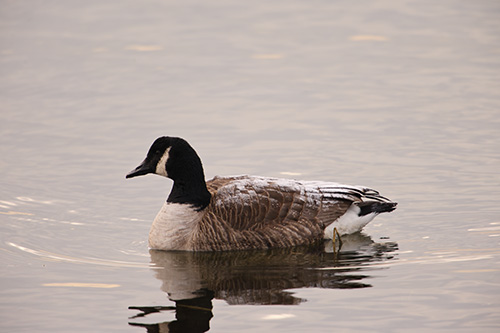
I was drawn to this spot originally by the sunrise reflecting on the water. But that quickly faded (it was an overcast morning). Since I had driven all the way down to the water and realized I wasn’t going to be able to make any sunrise images, I decided to practice long range bird shots. The two images here are taken with a Nikon 600 f/4 and 2.0 TCE III, the equivalent of 1200mm of glass. That is the longest combination you can get with Nikon gear. The focus on the images is pretty good, better than when I first started using this combination a few months ago. However I’m missing the sparkle of light I needed to make the eyes stand out. So much for overcast days.
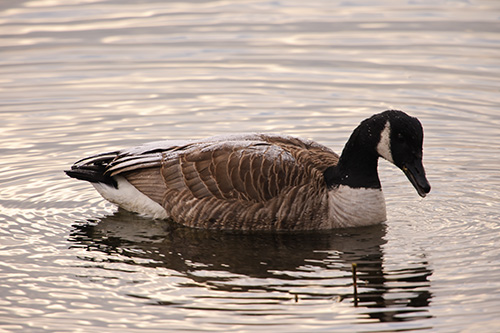
Many locations I wanted to photograph this winter have been difficult to access due to snow and ice. Given that we expect temperatures to rise this week and melt some of the ice and snow, I hope to get to some new locations. One such location is Barnegat Light in New Jersey. I look forward to sharing with you images from these new locations.
Your photos are absolutely incredible! Thank you so much for sharing them with your readers.
I’m hoping you might join me in a recent wildlife project we’ve launched.
Our ultimate goal is to build the go-to platform for documenting all the world’s organisms and through doing this we hope to develop an effective way to measure Mother Nature’s pulse. By encouraging the masses to document their encounters with nature, we hope to build a powerful force for data collection and an important educational tool for wildlife awareness and preservation.
We hope you’ll support us on this mission by joining Project Noah today. If you have any questions, please feel free to contact me at [email protected] & http://www.projectnoah.org